
Resource Hub
The Mission-Critical Projects Hub. Zero Room for Error.
Straight answers on the labor side of the builds where a delay is not just expensive, it is unacceptable: hospitals and healthcare facilities, semiconductor fabs, advanced manufacturing, data centers, and energy infrastructure. Where the work is landing, why specialized crews are so hard to find, and how contractors keep temp labor under control across every site and supplier.
Data centers get most of the headlines, but they are not the only build where the labor market is under strain. Hospitals, semiconductor fabs, and advanced manufacturing plants are all racing to staff specialized trades on compressed timelines, with almost no tolerance for compliance gaps or schedule slippage. SLM manages temp labor for every trade on mission-critical projects, so we see the same pressure points on every job: finding crews with the right experience, clearing them through strict site requirements, and knowing exactly what labor cost the project last week.
This hub organizes what we have learned, by sector and by problem, so you can go straight to the question you have.
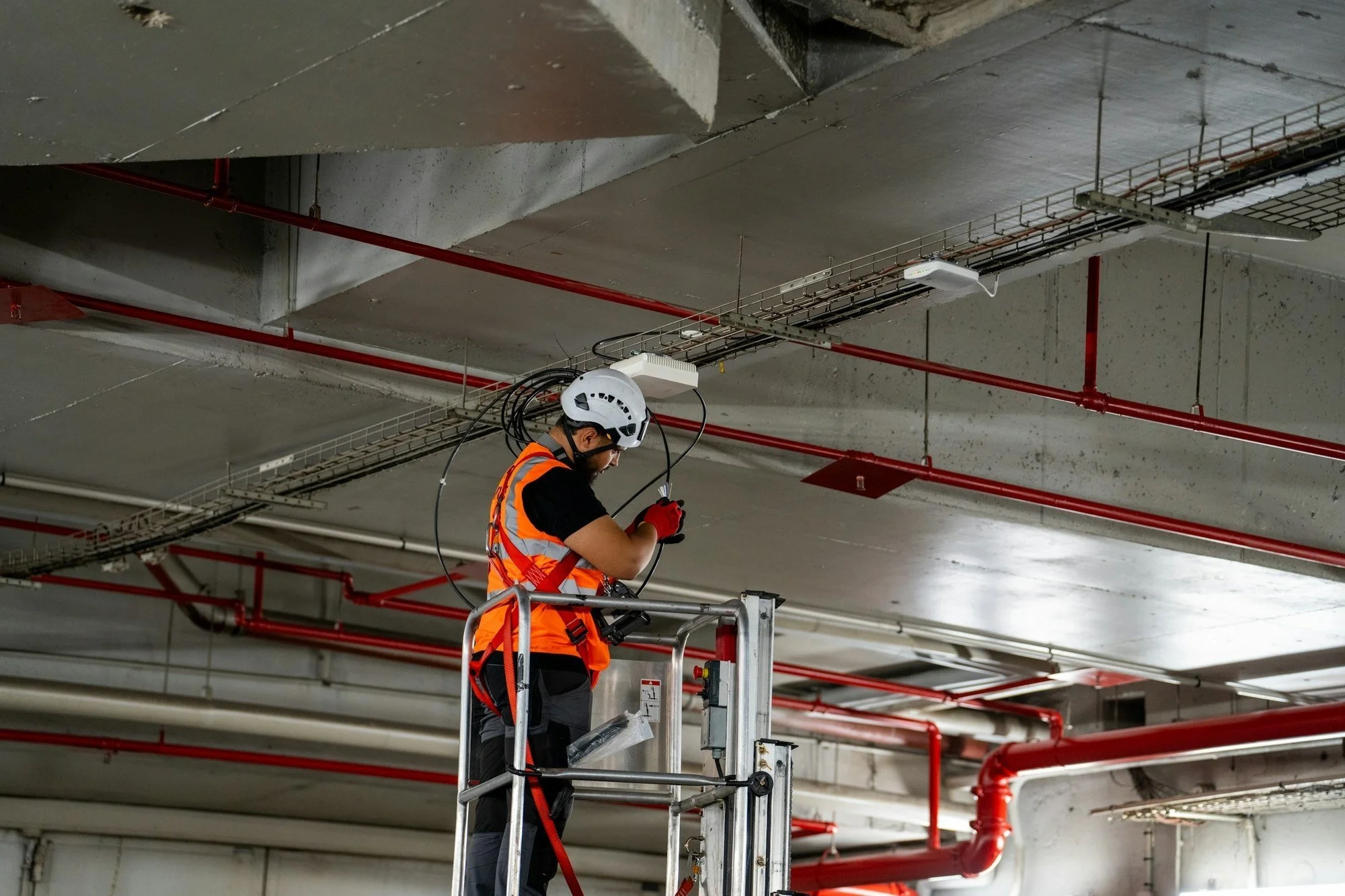
Built for Zero-Downtime Projects
On a mission-critical job, the owner’s rules come first. Hospitals require infection control procedures and work around patients in occupied buildings. Chip fabs have cleanroom protocols and long badging lists. Every owner has its own background, drug screen, and training requirements, and a worker who shows up without them does not get through the gate.
Most contractors meet the demand by stacking suppliers, each with its own paperwork, timesheets, and invoices. That keeps crews on site, but it leaves your team chasing credentials and reconciling bills across every project.
SLM keeps the suppliers you already trust and runs the whole program through one platform and one dedicated team. Requirements are set per job, workers are cleared before they are scheduled, and you see every hour and every dollar in one place.
“We had a full crew at the hospital gate on day one, and a third of them could not badge in because their paperwork was not done.”What we hear from contractors on healthcare and advanced manufacturing builds
Every owner’s requirements, per job
Background checks, drug screens, safety training, and site orientation are set by job, so each crew is held to that owner’s rules, not a generic checklist.
Cleared before they show up
Workers are verified before they are scheduled. Credentials that expire, like equipment operator certifications, are flagged before they lapse.
Keep the suppliers you trust
Your existing suppliers roll into the program. Crews and relationships stay intact, and they bill SLM instead of you.
The right experience, not just bodies
We match requests to suppliers with healthcare, fab, and industrial experience, and bring in vetted new suppliers when a market runs short.
Capture time your way
Use the SLM app to clock crews in and out, keep the sign-in sheets or spreadsheets you use today, or keep your third-party timekeeping system. Hours are verified before anything is billed.
Billed the way you close books
One consolidated invoice, or broken out per job and per supplier, with exports formatted for your accounting system. Drill down to detail, all the way to the time punches.
Cost on the job every week
Approved hours roll into weekly cost by project, supplier, worker, and cost code, so PMs see last week’s labor cost before the invoice lands.
Know who is on site
See every worker, every supplier, and every open request across all of your mission-critical jobs from one dashboard.
Rehire your best hands
Rate workers and keep notes as projects wind down. When the next job starts, we source the crew you want back and screen out the ones you do not.
Healthcare Construction
Hospitals and medical campuses run on the same zero-error standard as any mission-critical build, staffed by crews that have to get it right the first time.
The Healthcare Construction Boom: Key Insights and Best Practices
The post-pandemic surge in healthcare construction, and why skilled, adaptable crews are essential to meeting hospital-grade build standards.
Read the breakdown → Project SpotlightHouston Methodist Cypress Hospital Opens
A look at the completed 105-acre Houston Methodist medical campus in Cypress, Texas, and the skilled trades and coordination behind a zero-error healthcare build.
Read the breakdown → Client WinStarr Electric Wins 2 ABC Carolinas EIC Awards for CaroMont Regional Medical Center
How Starr Electric’s work on a 176,811-square-foot hospital expansion earned two Excellence in Construction awards, with SLM coordinating 42 temp skilled workers across nearly 7,900 labor hours.
Read the breakdown →Semiconductor & Advanced Manufacturing
Chip fabs and advanced manufacturing plants are some of the most compliance-heavy builds in the country, and they are drawing from the same shrinking pool of skilled trades.
Texas and Arizona Lead U.S. Commercial Construction Growth
Semiconductor investment in Phoenix and Chandler helped drive double-digit construction spending growth in Arizona and Texas, and a deeper skilled trades shortage with it.
Read the breakdown → ComplianceData Center Growth, CHIPS Act Compliance, and Temp Labor
The labor challenges behind fast-growing mission-critical builds, CHIPS Act compliance considerations, and how to blend temp and full-time crews.
Read the breakdown → ComplianceMastering Prevailing Wage Compliance
Prevailing wage requirements on federally funded projects, the financial and legal risk of getting them wrong, and how to stay audit-ready.
Read the breakdown →Data Centers & Energy
Two of the biggest mission-critical sectors have their own hubs. Start there for the full picture.
The Data Center Construction Hub
Markets, labor strategy, and field operations for every trade on hyperscale and colocation builds, including low voltage and structured cabling.
Explore the hub → Resource HubThe Energy Construction Hub
Solar, battery storage, wind, transmission, and power generation, with a focus on staffing remote, multi-supplier sites.
Explore the hub → Market TrendsAI and the Data Center Boom: New Skilled Trade Jobs
How AI-driven investment is creating a wave of skilled trade jobs, and why coordinating thousands of temp workers across sprawling sites takes dedicated labor management.
Read the breakdown →Labor Strategy
The labor models and decisions that apply across every mission-critical sector, and determine whether a project hits its schedule.

MSP vs. VMS: What’s the Difference, and Which Do You Need?
VMS is software for tracking suppliers, timesheets, and spend. MSP is the team running the program. Why most contractors mix them up when they often need both.
Read the breakdown → SuppliersYou Don’t Need to Fire Your Staffing Agency
The case for a coordination layer that sits alongside the suppliers you already use, consolidating invoicing, compliance, and communication instead of replacing them.
Read the breakdown → Cost Control5 Signs Your Temp Labor Program Is Costing You More Than You Think
Five hidden cost drivers, from supplier sprawl to manual timesheets and compliance blind spots, and how to fix them.
Read the breakdown → GC StrategyThe Hidden Cost of Self-Performing Work
Why GCs who self-perform struggle to right-size crews, and how temp specialty labor lets them keep lean core crews and bid with more confidence.
Read the breakdown → SuppliersFrom Phone Calls to a Platform: Supplier Accountability
How relationship-based supplier accountability breaks down at scale, and how a platform brings performance data, compliance tracking, and billing reconciliation instead.
Read the breakdown → VisibilityWhy Live Data Is the Missing Link
Multi-supplier jobsites often lack real-time visibility into who is on site and doing what. Live data turns that gap into proactive decisions.
Read the breakdown →Field & Compliance Operations
What it takes to keep crews compliant, safe, and productive on a mission-critical jobsite, from electrical safety to peak-season surges.
How NFPA 70E Training Boosts Safety and Compliance
The NFPA 70E electrical safety standard, and how proper training reduces delays and builds trust with owners on safety-conscious sites.
Read the breakdown → CompliancePeak Season, Peak Risk
Why temp labor without verification, training, and compliance monitoring creates delay and regulatory risk when projects surge.
Read the breakdown → Electrical TradesHow Electrical Contractors Get Temp Labor Spend Under Control
How sourcing local skilled labor instead of per diem travel crews cuts lodging and transportation costs.
Read the breakdown →See How It Works
The capabilities mission-critical contractors lean on most, plus results and comparisons.
Compliance Monitoring
Every credential and owner requirement tracked per worker and per job, flagged before it expires.
Explore → PlatformTime & Expense Tracking
Hours and per diem captured your way, verified before billing, and tied to the right job.
Explore → PlatformConsolidated Invoicing
One reconciled invoice, coded to your jobsites, suppliers, and cost codes, ready for AP.
Explore → Case StudiesSee the Results
How contractors have brought temp labor under control across sites and suppliers.
Browse case studies → ComparisonsCompare Your Options
Side-by-side breakdowns of SLM against the other ways contractors manage temp labor.
View comparisons → IntegrationsWorks With Your Systems
How SLM connects with the HR, payroll, safety, and ERP systems you already run.
See integrations →Frequently Asked Questions
Quick answers to the questions we hear most about temp labor on mission-critical projects.
What counts as a mission-critical construction project?
Mission-critical projects are builds where downtime, delay, or failure carries outsized consequences: hospitals and healthcare facilities, semiconductor fabs, advanced manufacturing plants, data centers, and energy and utility infrastructure. They demand specialized trades, strict safety and compliance standards, and far less tolerance for schedule slippage than a typical commercial build.
What trades does SLM cover on mission-critical projects?
Every trade on the job, from site work and structure to electrical, mechanical, process piping, controls, and commissioning. If a supplier in the SLM network does not already cover a trade or market you need, SLM finds and vets one for you.
Why is skilled labor so hard to find on mission-critical projects?
Mission-critical builds concentrate demand for electricians, pipefitters, HVAC technicians, and other specialized trades in a handful of markets and on compressed timelines. Healthcare, semiconductor, data center, and energy work are all competing for overlapping pools of experienced trade talent at the same time. See the mission-critical labor shortage.
How does SLM keep crews compliant on mission-critical jobsites?
Every owner and site requirement, such as background checks, drug screens, safety training, and site-specific orientation, is tracked per worker and per job. Credentials that expire are flagged before they lapse, so workers are cleared before they reach the gate. See compliance monitoring.
Do we have to change how we capture time?
No. Use the SLM app to clock crews in and out, keep the sign-in sheets or spreadsheets you use today, or keep your third-party timekeeping system. SLM takes the hours in however you capture them and verifies them before anything is billed. See time and expense tracking.
What’s the difference between an MSP and a VMS for construction?
A Vendor Management System (VMS) is software that tracks suppliers, timesheets, and spend. A Managed Service Provider (MSP) is the team that actively runs the temp labor program, supplier performance, and compliance on top of that data. Many programs need both, and SLM owns both the platform and the service. See MSP vs. VMS, explained.
How can contractors staff mission-critical projects without blowing the schedule?
By building a pre-vetted bench of suppliers before a shortage hits, running temp labor as one managed program instead of ad hoc calls, and treating compliance and safety documentation as a capability that scales with headcount rather than a last-minute scramble. See 5 signs your temp labor program is costing you more than you think.
Is SLM a staffing agency?
No. SLM is a temp labor command center. SLM does not employ the workers; it manages the suppliers you use through one platform and one dedicated team. See is SLM a staffing agency?